Showing posts with label books. Show all posts

Thursday, October 12, 2023

Books: Everything Was Forever, Until It Was No More


Everything Was Forever, Until it Was No More by Alexei Yurchak.

This isn't the sort of book I would normally read. However with Ukraine and Russia in the news, I was finding myself wanting to know about the context of the conflict. So I went to the library and found this on the shelf. I picked it pretty at random from my library's collection of books on the USSR. It seemed to focus on how the collapse of the Soviet Union happened, which interested me - How does Russia go from being a super power to what it is now?

I don't know much about the Soviet Union beyond the high level summary of the cold war you get in high school history class. This book does not seem to be a text book summarizing various views so much as an academic book putting forth a specific view. Without knowing much about the subject, its difficult to judge how critically I should read it, but taking it face value this book nonetheless presents a fascinating point of view on what happened.

This was a challenging book to read. I'll do my best to summarize, although I'll probably do a bad job as I would probably need to do a second read through (at least) to really understand what this book presents.

The general premise seems to be that after the death of Stalin, the words and symbols of the regime became hyper formulaic and purely ritualistic, almost like a religion where everyone prays but nobody actually pays attention to what they are saying. This lead to the system feeling eternal, because it was always the same rituals and referencing the same historic speeches and ideas. However during perestroika where people were suddenly encouraged to improve the status quo in a more bottom up fashion and question old truisms, the system quickly collapsed as it became obvious the old symbols were just empty.


One of the main points of this book is that it is wrong to view the people of the soviet union as either against the soviet system or for the system. The situation is much more complex than such a black and white binary.

For example, the author talks a lot about the local leaders of the komsomol youth group. According to the author, they would often be quite ideologically motivated, believing in communism, but at the same time, not afraid to try and fake the more ideologically motivated busy work in order to do things that actually mattered. They didn't see this as contradictory but as a way to further socialism. Similarly western cultural imports were often not seen as opposing socialism but furthering it (but not always). Everything depended on context, and actions that might seem from the outside as being against soviet communism might seem to people in the system to be perfectly reasonable things to do and in accordance with the precepts of communism.

I found the discussions of how social relations manifested in these groups to be particularly interesting. According to the author, that while being a dissident or overly negative towards the soviet system was certainly frowned upon, so was being obnoxiously pro-soviet. What was more important was to be one of the group - a "normal" person and not someone who caused problems for other people. An antagonistic person causes problems for the group, regardless of which direction they are antagonistic in. People insisting the group follow every precept to the letter is just as annoying and disruptive as the people trying to tear down the system. The people who thrive are the ones who help each other out; attend silly meetings even if they think it is stupid because they know their friend will be judged by how many people show up and keep things running smoothly.

I can't help but feel that the author's description of this mirrors how office politics and cliques work in the workplaces of the capitalist world. Most places I've worked, and especially my experience at the MediaWiki open source project mirrors this. There is usually two power structures, the official one and the more unofficial one. The official hierarchy might give orders, but if you actually want to accomplish anything it pays to know who the right people are, and be on good terms with them so they identify you as one of "them". Being successful means enmeshing yourself inside the local social fabric; helping out other people where you can so that they will in turn. At MediaWiki this is turned up to 11 where some people are volunteer devs and some people are paid, with all sorts of different interest groups with varying, sometimes even contradictory, goals. The coming together of different conflicting groups can really exasperate us vs them dynamics and unofficial power structures. People might wax poetic about us vs them narratives being dangerous. They certainly aren't wrong, but at the same time it is always there to one extent or another. For better or worse, if you want to accomplish something, in any field, you need to get yourself to be an "us" and not a "them.

The author then goes into a discussion of more counter-cultural types (for lack of a better word). According to the author, these people were less opposed to the system, but decided to opt-out of it. The opposite wasn't to oppose the system but to just not care about the system. To just live their life without worrying, talking about or thinking about the system. I suppose its a little like the old saying, the opposite of love is not hate but indifference.

All this really set on its head all my preconceived notions of an authoritarian government that individual citizens were plotting to overthrow. Of course, I'm not sure how critically to read this book, no doubt there were many soviet dissidents in the traditional sense too. However I suppose this makes sense to me, for any given thing, some people will love it, some will hate it, most will just get on with their lives and do the best that they can while still inevitably affecting the system.


All in all this was a fascinating book that gave me a lot to think about. My summary was probably a poor attempt - there is much i don't quite understand.Regardless, this book was like a look into an alien world, where things are both really different but at the same time similarities shine through. In fact, I wish SF authors would make their aliens be a little less carbon copies of western societies. Obviously aliens would not be human at all, but at the very least we can make them not be culturally American.

In conclusion though, the central question this book is supposed to answer is: how did the soviet culture go from being eternal to collapsing almost overnight. I wish the book spelled the answer out a little more for me. I can see how everything in this book builds to and has bearing on that question, but i feel like I am missing a piece of the puzzle to make it all fit. I see how unique cultural practices, rituals, symbols and forms of messaging were very suddenly upended by perestroika, but I still feel I am in the dark on why the soviet system could not survive that or shift to something new. In fairness, perhaps I just need to read this a bit more closely, or be better versed in the context of the soviet system, which i know very little about.

Regardless, a fascinating read and window into another culture.

Thursday, March 2, 2023

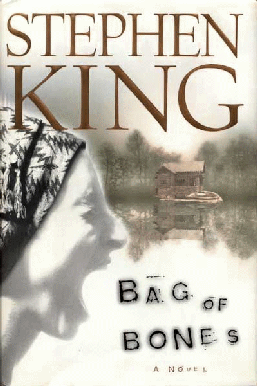
Book review: Bag of Bones by Stephen King


 This was the first Stephen King book I have ever read. As a general rule I haven't read much horror, so I wasn't sure what to expect. I suppose monsters and ghosts chasing people. It ended up being quite different than that, particularly in the first half.

The story follows Mike Noonan, who is a novelist mourning the death of his late wife. Ever since his wife died he is unable to write anything. Eventually he is drawn to his vacation cabin in Maine, where he becomes involved in the plight of a young single mother Mattie and her custody battle with the rich evil father of her late husband. Later the plot becomes entwined with the vengeful spirit of the victim of a historical hate crime and a curse that she places upon the residents of the town.

I think this story can be divided into three parts: Before the cabin, Mattie's family drama, and the vengeful spirits. The parts seem quite different to me in tone, almost to the point of feeling like different novels with a connected plot. I liked the first two parts a lot, but was not particularly fond of the last ending part.

In the first part, we get to know the depressed, mourning Mike Noonan, who is struggling with writer's block. And not just writer's block, but general existential angst of what is the point of his life if he cannot write. This section reminded me of Dying Inside by Robert Silverburg, and I was wondering if I was getting a book similar to that one: a very inward facing character driven novel. However, this section turned out to be more of an introduction and after a few chapters, the plot moves forward to his relationship with Mattie - still fairly character driven, but not inward facing like the beginning was.

In the second part, we start to see Mike come alive again with his romance with the much younger Mattie (I'm going to zoom right past the age difference. Everything sex related in this novel is kind of off-putting and creepy). We have a distinctly creepy villain in Mattie's father in law, Max. There is an episode where the elderly Max tries to drown Mike, which is both terrifying and morbidly hilarious. On the whole I liked this part of the novel. It was exciting and dramatic, while also allowing Mike's character to shine through.

The final part of the novel is where things went a bit off the rails for me. Mattie is murdered and we transition to a ghost story about a ghost, whose son was murdered in a hate crime and curses the village out of grief. While the ghost is motivated to vengeance out of the terrible crime that befell her, by the time our novel takes place, the ghost is totally consumed by vengence and dehumanized. No amount of flashing back to the past can fix the lack of character in the present. There is a dramatic plot sequence with the ghost attacking, but there is no nuance, and the ghost is too far gone to be a sympathetic character, or a character at all. Perhaps this was meant to be a foil to how the other characters dealt with grief, or something along those lines, but it felt like it just didn't work for me. It honestly felt like a different book, with a somewhat boring, mindless villain pursing the main character, and the main character having to outwit it in an action sequence.

Anyways, overall I liked this novel. It both was and wasn't what I expected. The ending was all the negative things I don't like about horror novels, while the beginning was truly interesting.

As a final aside, Stephen King should not write sex scenes. At first I thought they were intentionally off-putting to hint that something was off about the main character, but turns out, no, that's just how King writes sex scenes. The book would be much better without them.

Sunday, January 22, 2023

Book review: Riddley Walker


This is a rather unique book. It tells the odyssey of the eponymous Riddley Waler who lives in a far future dystopia after a nuclear war reduced human civilization back to the iron age. Essentially, a series of events happen that lead to the protagonist being forced to leave his community where he interacts with the larger post-apocalyptic society he finds himself in and its various political, mythological and philosophical elements, stumbles upon the re-invention of gun powder, and in the end becomes a traveling story teller.

Plenty of books have been written with the premise of nuclear war destroying civilization. What makes this book unique is the writing style. To signify that significant time has passed, all the spelling in the book is non-standard. For example, here is a quote:

The worl is ful of things waiting to happen. Thats the meat and boan of it right there. You myt think you can jus go here and there doing nothing. Happening nothing. You cant tho you bleeding cant. You put your self on any road and some thing wil show its self to you. Wanting to happen. Waiting to happen. You myt say, 'I dont want to know.' But 1ce its showt its self to you you wil know wont you. You cant not know no mor. There it is and working in you. You myt try to put a farness be twean you and it only you cant becaws youre carrying it inside you. The waiting to happen aint out there where it ben no more its inside you.

As you can imagine, this is pretty frustrating to read a times. Sometimes I think something means something, and discover chapters later that I misinterpreted it. I suspect if I read it a second time I would get a lot more out of it, but I also don't know I want to. At the same time I'm glad I read it at least once. It does feel quite different from any other books I've read.

One of things I like most about this book is the world truly feels alien. Too often science fiction books have aliens with superficial differences that feel basically the same as any modern day western culture. Although these are of course not aliens, I really did feel that this book depicted a society very different from our contemporary society. It wasn't just America with one quirk changed.

A large part of the book deals with the myth around "Eusa". I originally thought that this was talking about the United States and nuclear war, but it appears it is actually about St. Eustace. Or perhaps the intention is to be both? It is certainly interesting when reading this book how you can think one thing and then end up re-evaluating it all later.

The most closest comparison to another book is probably certain scenes in Cloud Atlas, although it seems that David Mitchell was taking very direct inspiration from this novel. However if you ignore the unique language, I think The Shadow of the Torturer is kind of similar. Which is interesting, as I didn't really like that book, but I got the same sort of feel from it. I suppose its the journey through a different world vibe that is similar.

In conclusion, certainly an interesting book but also a very frustrating book. I liked it but I don't think I would ever want to read it again.


Saturday, August 13, 2022

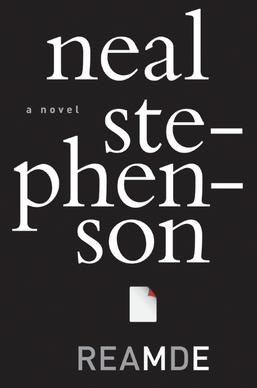
Book review: Reamde


It has been a while since I have read a Stephenson novel, so when I saw this 1044 pages of light reading on the library shelf, I thought I would give it a go.

While I still enjoyed this novel, overall it was one of my least favourite Stephenson novels that I have read. I think perhaps the type of novel this was - essentially a thriller set in basically our current world - showcased Stephenson's weaknesses and hid his strengths, as a writer.

Stephenson is pretty famous for writing giant novels, and this is no exception. However usually it feels like a lot more is going on to justify the length. In this novel, the plot seems much more straight forward, and instead of using the pages to explain complex concepts or explore the world, we instead get 150 page long car/boat chases.

I think fundamentally the reason why Neal Stephenson novels are usually really fun, is their setting. He essentially writes novels set in various nerd utopias. The difference between him and most other science fiction writers writing in utopia settings, is most of those types of novels spend a lot of time arguing for the utopia or telling you how good it is. In Neal Stephenson novels, there is less of that, and the novel is more just set there. We might see how much a character likes the setting through their eyes, and how excited they are by it, but it still seems less directly aimed at the reader. I think this eases suspension of disbelief, because it feels less preachy and allows one to get absorbed in the "coolness" of the fantasy without thinking about all the ways it falls apart. For example, both Ananthem and The Big U are romanticized versions of university life (albeit romanticized in opposite directions), Cryptonomicon is a romanticized version of the cypherpunk movement, Snow crash is kind of romanticized cyberpunk. [I read these a long time ago, I might not be remembering them that well]

In this novel, the only romanticized aspect, is a world where everyone thinks MMORPGs are really cool. Unfortunately, a world where slightly more people play MMORPGs, is a lame utopia.

Additionally it has very little to do with the plot. It does provide the inciting incident, where a ransomware computer virus infecting the MMORPG encrypts some mobsters' private files. However this felt arbitrary - the MMORPG aspect really didn't matter.

Even worse, we spend hundreds of pages on this MMORPG world and the ongoing re-alignment of the in-world factions (The so-called "War of realignment"). Just as it seems to be building to something, we cut away to the main plot, never bothering to resolve or revisit what was building. This is especially sad, because in a lot of ways, it was more interesting than the main plot. Instead it is relegated to being a rather trite metaphor for a theme in the main plot about people coming together to form a chosen tribe over whatever situations they were born into.

Perhaps that's the biggest disappointment in this book: The threads don't really come together to form something bigger. There are a bunch of interesting premises at various points that don't really seem to contribute much to the overall whole. There is the design of the MMORPG/War-of-realignment, which is talked about a lot, but doesn't really go anywhere. There are the motorcycle gangsters with katanas, which are introduced as a back-story for a side character, who just ends up being shot with no katana fights. There are the main character's relatives who are some sort of fundamentalist christian gun-nut cult, but when the action comes down they mostly just hide in their house like normal people.

Why bother with all these tantalizing details when everyone in the end just acts like a normal person. Their uniqueness seems unnecessary to the novel, which feels like a major let down.

Last of all and pretty unrelatedly, the female characters felt like they were written weirdly, in a hard to define way. The main character, Zula, spent most of the novel kidnapped, and there was a bizarre amount of discussion on the differing levels of chivalry her various kidnappers showed her. As if holding the door open for her somehow makes up for the whole kidnapping at gunpoint. Several characters debate whether Yuxia is a "sister" or girlfriend material, where "friend" or "person they just met last week under very traumatic circumstances" apparently didn't cross anyone's mind. All the romantic pairings seemed kind of random and forced (Except maybe Olivia & Sokolov). Yuxia had barely even exchanged any words with Seamus before suddenly being together. Csongor and Zula also had pretty limited interaction before falling in love.

In the end, i did enjoy it, but definitely not his strongest novel.

Friday, July 8, 2022

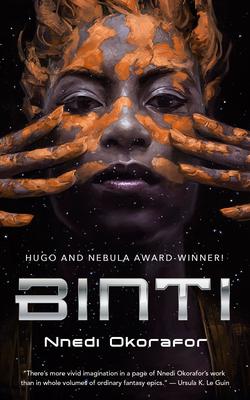
Book review: Binti

 I've never written a book review before, but what is a blog if not a platform to give your uninformed opinion to people who don't care about it :)


Recently I read the novella Binti by Nnedi Okorafor. I had recently saw it on the shelf at the library and I remembered it being pretty popular back when it was released, so thought i would give it a go. Overall, i liked it up to the ending, which I strongly disliked.

In general, it seemed like a fun coming of age/space opera-esque story. You have a main character who is an outsider and unsure of herself. Due to circumstances beyond her control she is thrust into the middle of interplanetary conflict which only she can resolve due to unique traits which originally had marked her as an outsider.

None of this is particularly ground breaking - I have read many stories with that type of plot structure - but it still makes for a fun story. The weird part here, is I don't think this is the type of story that the author intended to write. From what I remember of this book's release, the selling point was supposed to be how it explored the main character's culture (Which from what I understand is based on the real human culture of the Himba people). However, to me, that seemed like the most weak and superficial part of the book. All we really get, is that they don't like outsiders, and use an ointment made of mud that is very culturally important. We get very little in terms of why this is meaningful to the character, or how it affects her worldview, etc.

Its a reasonably common theme to explore "culture" in science fiction works. Admittedly, it is somewhat rarer but definitely not unheard of to explore it as an end in itself. More common is to have an alien culture to juxtapose against contemporary mainstream culture to make some point about the mainstream culture of the context the writer is writing in. Novels such as The Dispossessed and Stranger In A Strange Land come to mind as novels that posit some alien culture to contrast it with contemporary culture. Other times alien characters have a unique culture to provide an aesthetic of otherness for them. Consider how boring most aliens in star trek are compared to the Klingons that have a much better developed cultural back story. Or how alien the aliens feel in the Lilith's Brood series. Even if the cultural exploration is arguably not the primary point to these novels, the cultures they explore feel rounded and fleshed out. The cultural depiction in Binti seems flat comparatively, because even if its tied to a real culture, it was barely explored in the novella.

Ultimately I felt like this novella worked as a fun space adventure; it didn't work as an interesting cultural exploration.

Last of all the: The ending [Major spoilers ahead]

The ending ruined the book for me. It did not make sense in terms of character logic nor character emotion.

Basically - the aliens, who are very isolationist, are mad because the university stole the stinger of one of their leaders to display as an artifact. So they decide to murder everyone on a ship full of students in order to sneak in and retrieve it (or die trying). The situation is resolved by the university saying sorry, claiming that doing such a thing was against policy, and the appropriate people will be punished. Additionally one of the aliens was invited to be an exchange student.

To me, this felt just one step above, "it was all a dream". It makes no sense how the university could accidentally have obtained the artifact without realizing it was unethically sourced. Some researchers just show up with an alien body part, from aliens who generally refuse to talk to outsiders, and everyone just assumed the alien gave consent for this? It is difficult to reconcile these plot points together logically, unless the university was intentionally turning a blind eye, in which case, why would their apology be accepted? Second, nobody was at all upset that everyone on the ship was slaughtered. I could understand maybe letting bygones be bygones for the greater good - but they should at least be a little sad about it. Nobody seemed to care at all.

In conclusion: Generally fun plot. The "cultural" aspects were superficial and overrated. Ending sucked.